Introduction
In this seventh Osprey article, I am highlighting the size differences apparent in the nestlings in the Boulders nest. The Owosso Ospreys were a couple weeks behind in starting their nest, and the nestling there is yet only occasionally visible.
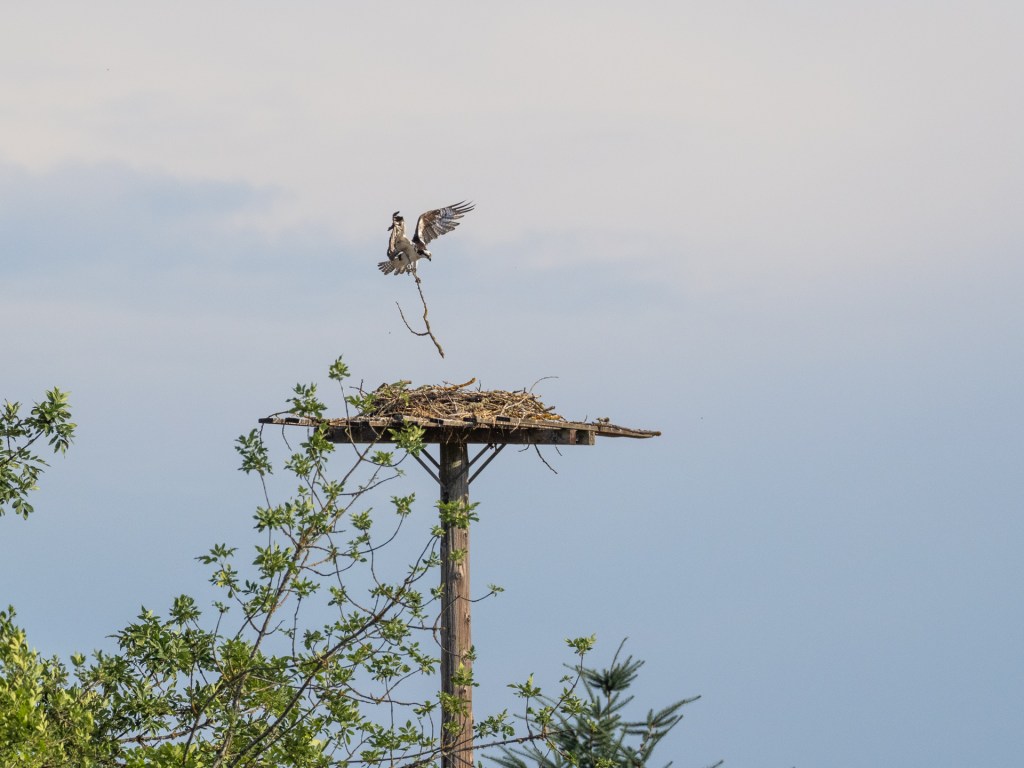
The ospreys at both the Boulders and the Owosso nests have been adding material to their nests–the photo above shows one of the Owosso Ospreys bringing a large branch on July 24.
Boulders Nestlings
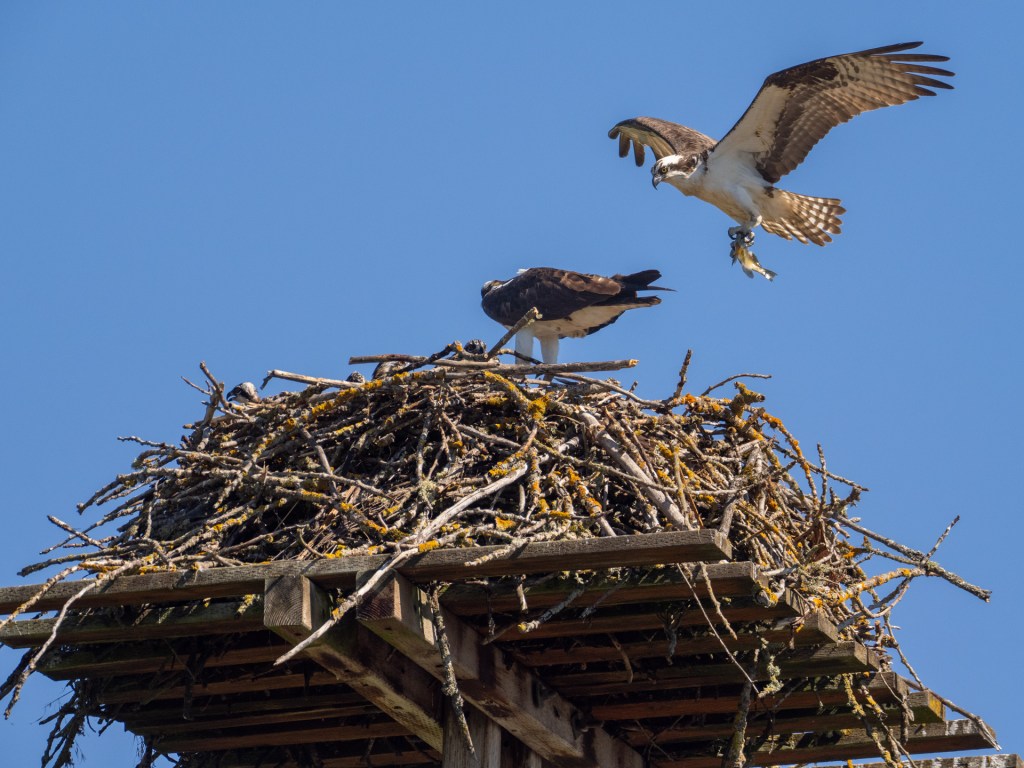
The Boulders male above is bringing fish for a hungry brood of three nestlings this season. The delivery above will not go very far.
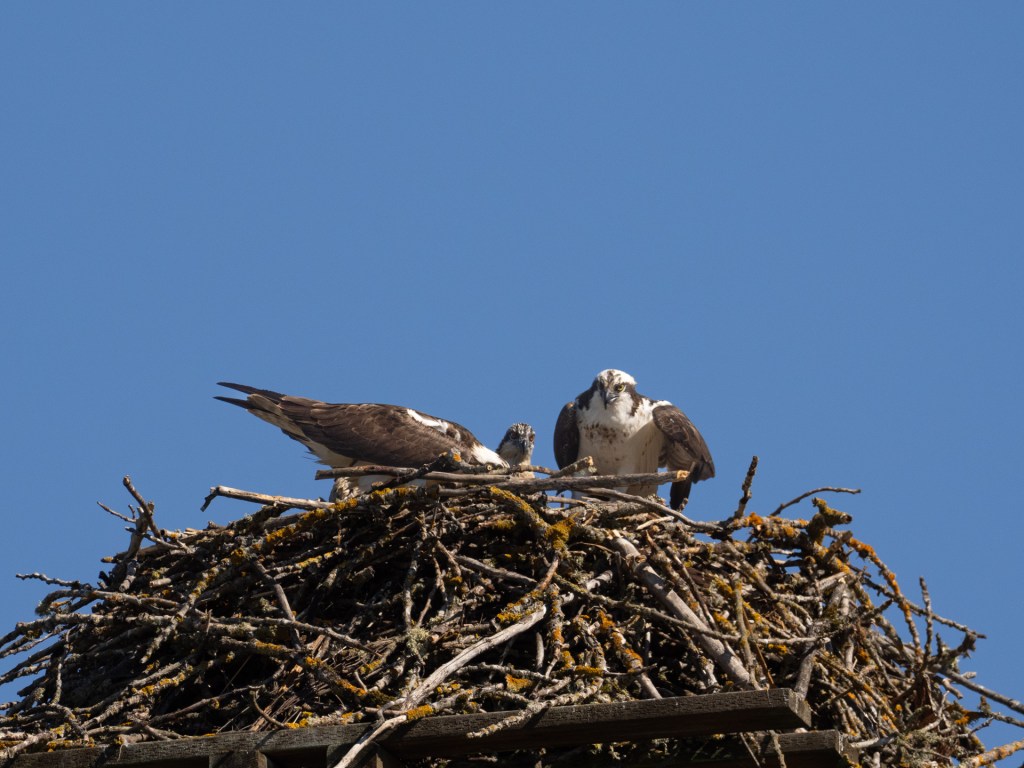
The male allows the female to take the fish while one of the youngsters looks on expectantly.

The Boulders male didn’t require coaxing from the female to quickly head back for more fish. Alan Poole summarizes the challenge male Ospreys face after the eggs hatch.
Delivery of fish by male Ospreys doubles and then triples in the first twenty days after the chicks hatch, a critical growth period for nestlings. Not only that, young take an increasingly large share of each fish as they age, from about 20%—40% in their first twenty days of life to about 50%—60% in the fifteen days after that. A male parent with three half-grown young (twenty to thirty days old) has many hungry mouths to provide for: his own, those of his young, and his mate’s as well. Males typically spend about 20%—30% of the day foraging when nestlings are taking food at peak demand.
Ospreys: The Revival of a Global Raptor, Alan F. Poole, p. 100.
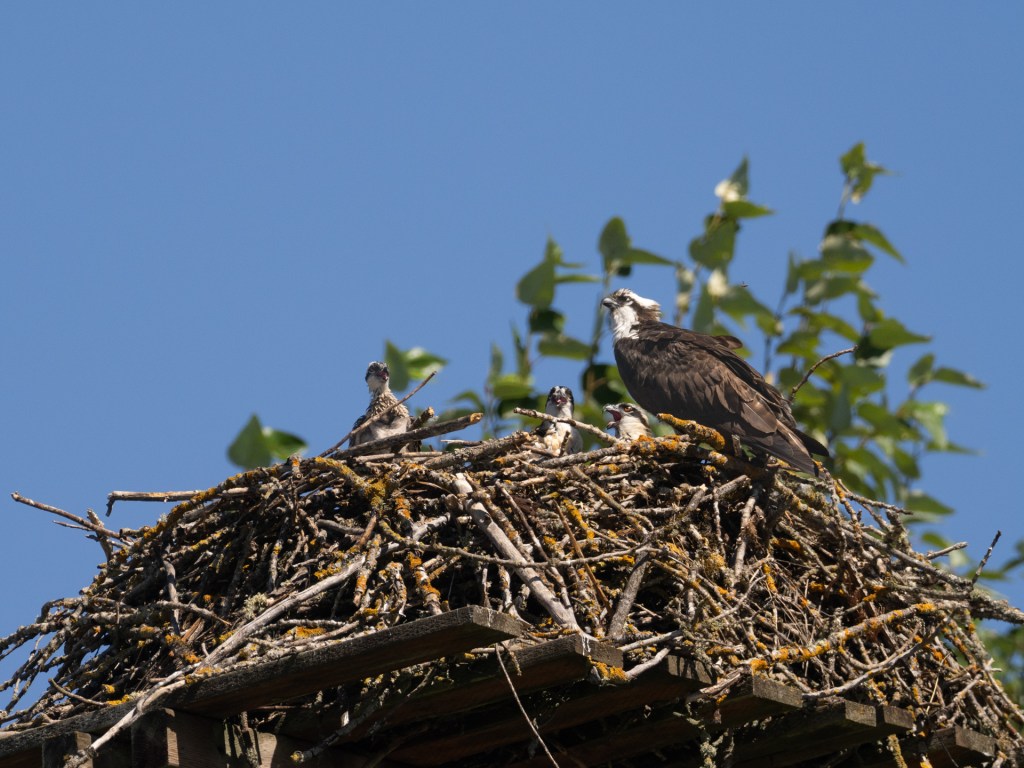
One of the three Boulders nestlings is markedly smaller than the other two–compare the neck on the one on the left with the other two next to it. Alan Poole describes the background, and potential consequences to size differences in Osprey chicks.
At most nests, however, about two-thirds of them, the chicks are much farther apart in age—four to five days or more—with young from third- and fourth-laid eggs much smaller than their older siblings. These runts are at a big disadvantage as broods mature, especially when food is scarce at the nest. Two to three times as many runts die before fledging as do their older nest mates, or young in more even-aged broods.
Ospreys: The Revival of a Global Raptor, Alan F. Poole, p. 97.
I hope the adult male Osprey brings sufficient fish for all three nestlings to successfully fledge.
 Walking with Curiosity
2 responses to “Osprey 2023 Season Article 7”
thank you
LikeLiked by 1 person
[…] Article 7 […]
LikeLike