
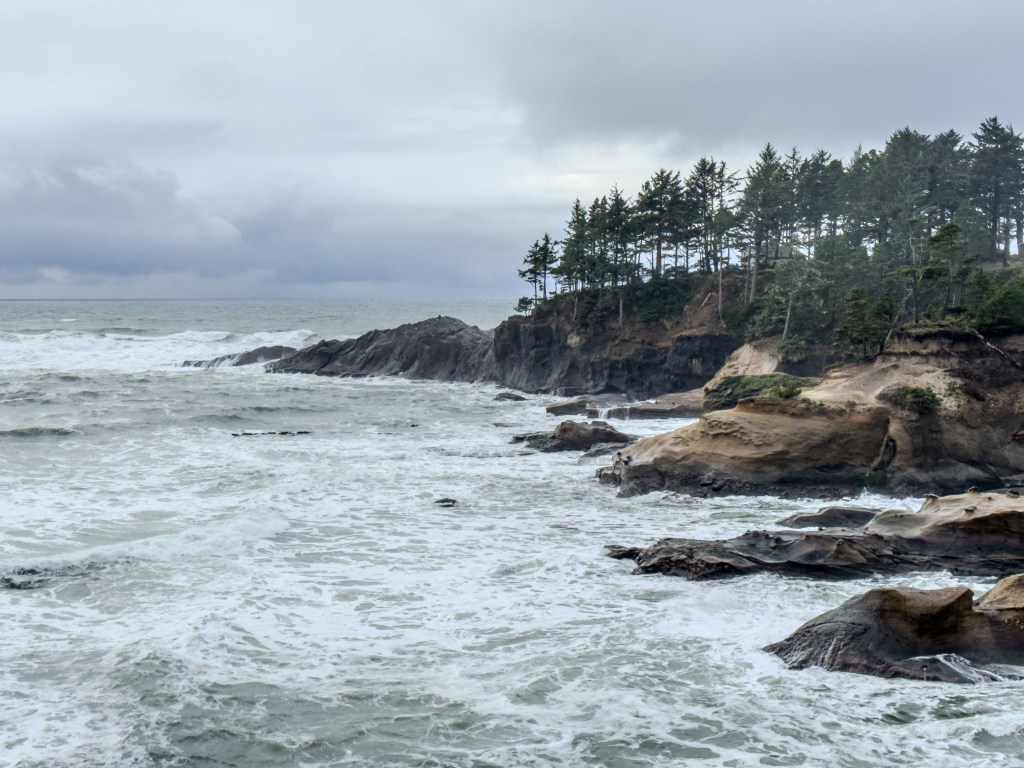
Hideko and I spent several days on the central Oregon coast in early January. We came hoping to see wintering waterfowl and migrating whales but instead were treated to several days of storm-watching.
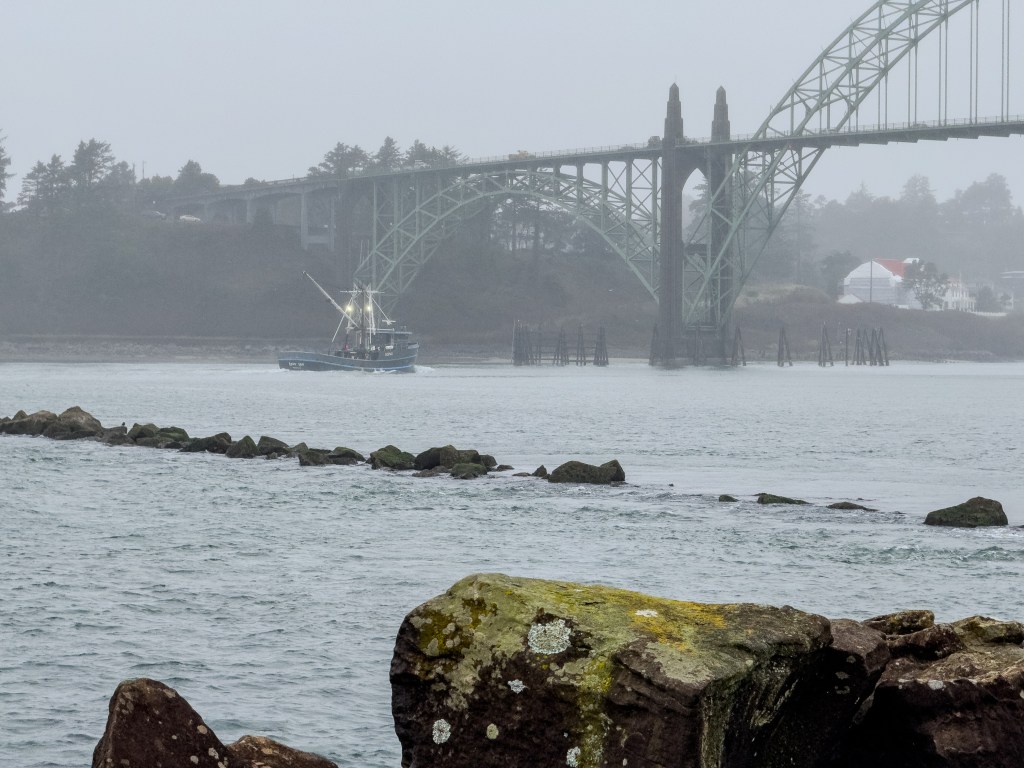
It was foggy much of the week, as in the photo above, which shows a fishing boat, the Lady Law, heading into port at Yaquina Bay in Newport in the early afternoon.

On January 6, rain squalls continued all day, and we stayed inside the condo enjoying the endless changes in color, shape, and luminosity in the clouds and the ocean.
We were in a condo just above the rocks north of Depoe Bay, and several times during our visit we were startled by spray from the waves splashing loudly against the kitchen window.
I was intrigued by an extreme example of the power of Pacific Ocean winter storms cited by the atmospheric scientist Cliff Mass, in a description of a NOAA1 research flight through a December 12, 1995 storm.
Flying offshore of the Oregon coast at around 4,000 feet, the plane experienced winds of 100 mph to 120 mph in a highly turbulent environment, with salt spray reaching the plane’s windshield as high as 2,000 feet above the wind-whipped seas.
The Weather of the Pacific Northwest, Second Edition, Cliff Mass, p. 91.
Fortunately, the storms didn’t reach that intensity on this trip.
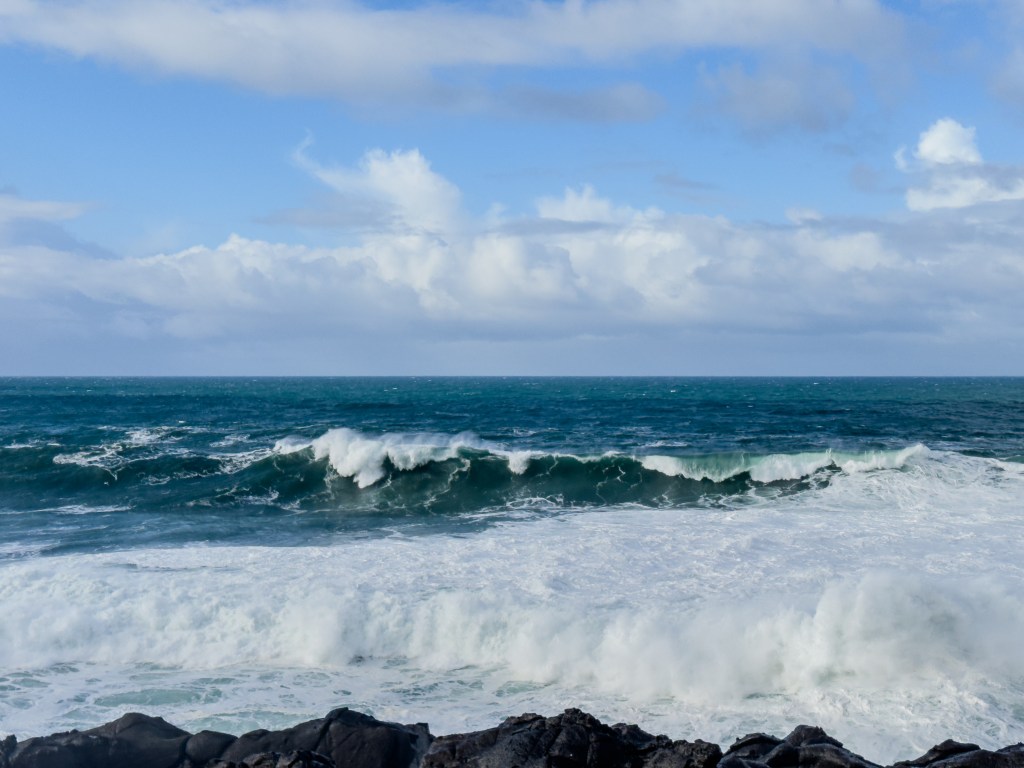
Sea foam is often visible where the waves break against the rocks, and it is easy to assume that it is caused by pollution. Fortunately, the explanation is more natural and more interesting.
Like any foam, sea foam is pockets of gas trapped in a matrix—in this case, seawater. But water alone won’t sustain the durable bubbles that lasting foam demands….
Between the Tides in Washington and Oregon: Exploring Beaches and Tidepools, Ryan P. Kelly, Terrie Klinger & John J. Meyer, p. 199-200.
In the case of sea foam, the required dissolved materials are also fats and proteins, along with lignins, the long-chained molecules that lend strength to wood and are present in some algae. And broken-down algae are indeed the source of these dissolved compounds in seawater, particularly in the aftermath of a bloom of single-celled algae offshore. The churning and turbulent mixing of water onshore then whips air into the mix of water and dissolved materials, creating foam, which can persist for hours or even days.
The late afternoon cloudscapes were mesmerizing as several squalls slowly moved onshore from the southwest. The seemingly infinite ocean horizon presents an ideal setting for these scenes and kept me going to the window repeatedly all afternoon.
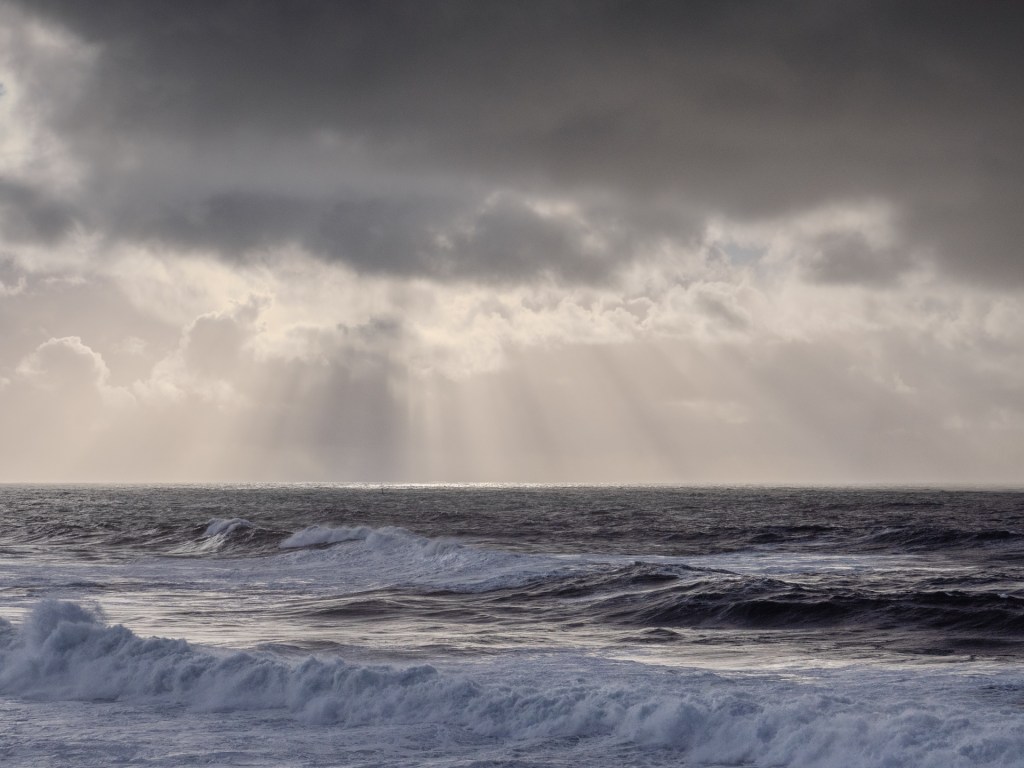
By 3 PM, the sun was obscured behind dark clouds, casting dramatic shafts of light and shadow to the ocean below.
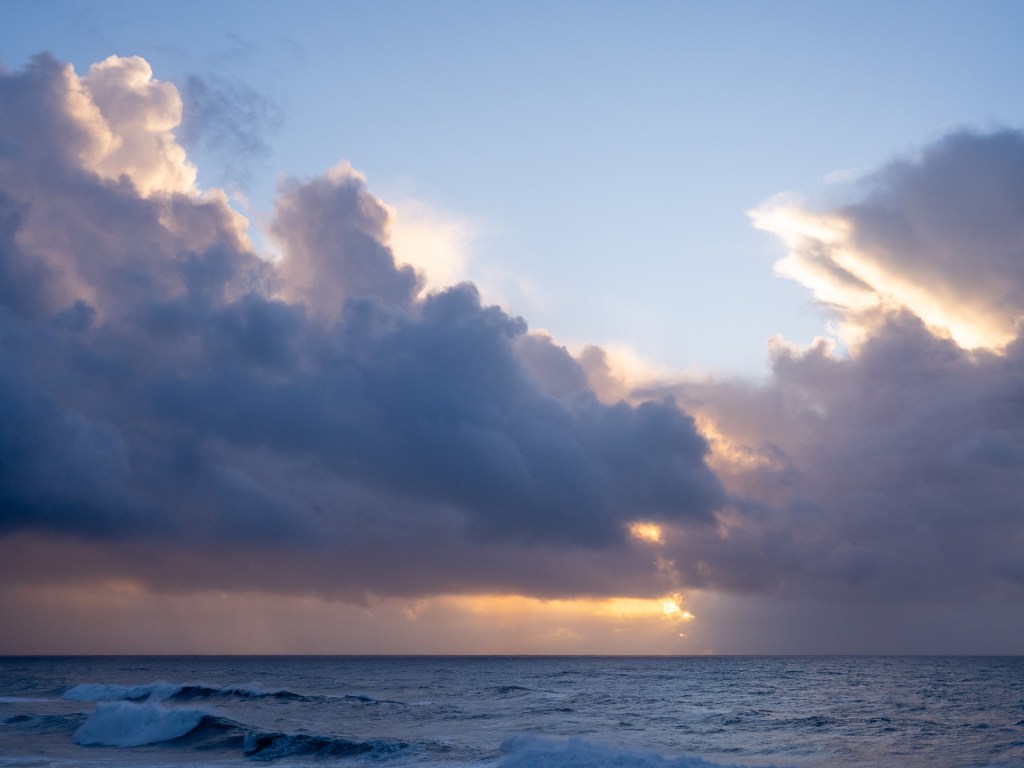
A little more than an hour later the sun was setting behind another rain squall, bringing a fitting end to a day of storm-watching on the Oregon coast.
We didn’t see any whales and very few seabirds on this trip, but came away with enduring memories of storm clouds and rough seas that will draw us back again.
- National Oceanic and Atmospheric Administration (NOAA). ↩︎
 Walking with Curiosity
4 responses to “Storm Watching”
Hi Tom & Hideko!! What a wonderful piece on storm watching! As always, a very intriguing, informative post with gloriously beautiful photos. The kaleidoscopic weather changes and color schemes are stunning. It must have been thrilling to witness firsthand. Thank you so much! Love, -Judith
>
LikeLiked by 1 person
Hello Judith! It is great to know you enjoyed the article! Thank you so much!! Tom & Hideko
LikeLike
WOW! Such fantastic, dramatic photos, with Mother Nature showing her scary, stormy weather. I, always, look forward to seeing your photos.
Jan
LikeLike
Thank you, Jan! I am glad you enjoyed seeing the storm watching photos!
LikeLike