Kyoto History
Hideko and I spent about ten days in Kyoto in mid-November 2023 walking around the temples and shrines in the eastern hills (Higashiyama).
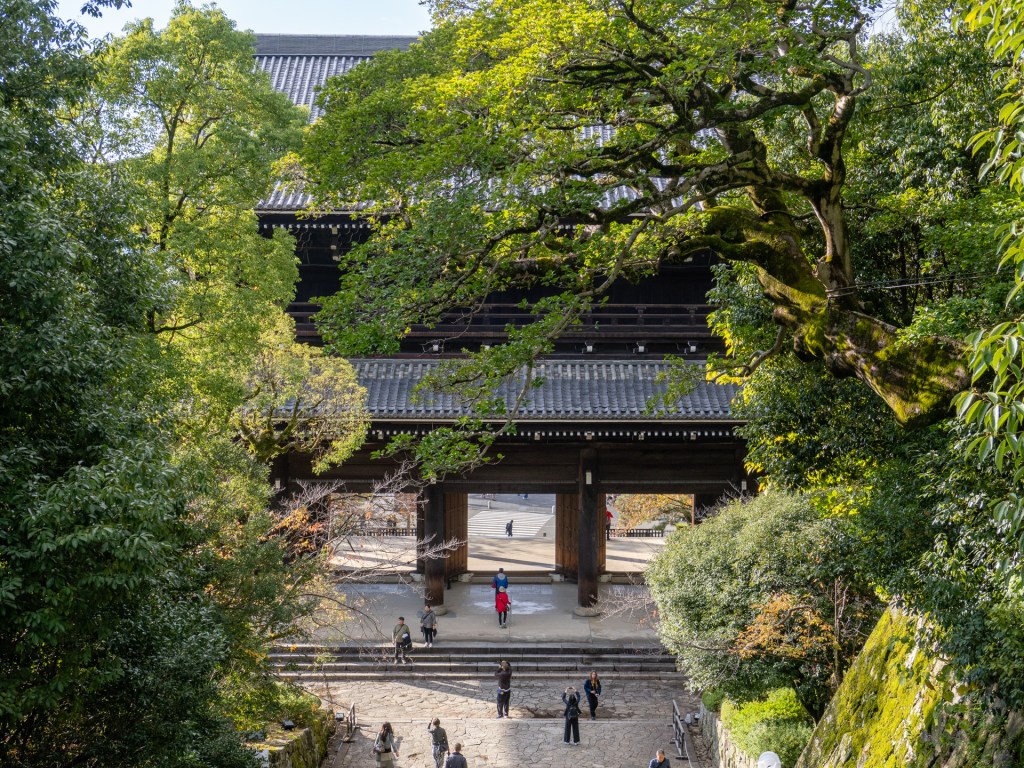
The photo above is from atop a long, steep staircase, looking out on a massive gate leading into the Chion-in temple complex. The Kyoto resident Alex Kerr describes this and the many other types of gates to be seen in Kyoto.
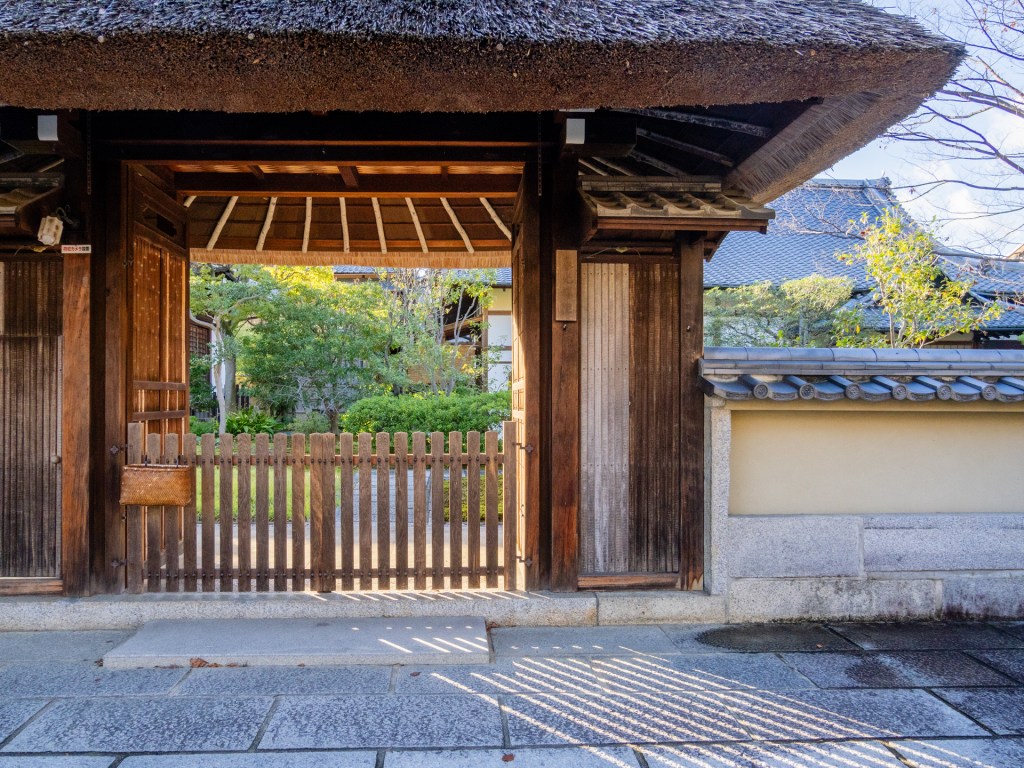
Thousands of gates, actually I think it might be tens of thousands, are scattered throughout the city. There are grand gates, as high as a three- or four-story building, that tower in front of Chion-in and Nanzenji, and more reserved gates like the thatched “country-style” gate of Honen-in, on down to the modest ones that stand in front of old-style houses. From a street-level point of view, these gates define the city as different. Everywhere else in Japan, it’s just a lot of boxy modern buildings. But in Kyoto we have gates. Gates are how we know we’re not in Tokyo.
Another Kyoto, Alex Kerr with Kathy Arlyn Sokol, p. 14
Below is an example of one of the more reserved thatched gates.
Although I studied Japanese history, politics, economics, and language in graduate school and have been to Kyoto several times since retirement, I am still striving to build a clear sense of the city’s ancient history.
Kyoto was Japan’s political and cultural capital for more than a millennium before the dawn of the modern era. Throughout most of that period, it was home and ritual center to the emperor and the civil aristocracy, the focal point of both sectarian and warrior politics, and the seat of the country’s most successful industries. Until about the fifteenth century, it was also among the world’s largest cities and, as the eastern terminus of the Silk Road, it was a place where the political, artistic, and religious currents of Asia coalesced and flourished.
Kyoto: An Urban History of Japan’s Premodern Capital, Matthew Stavros, p. XVII.
Tofuku-ji
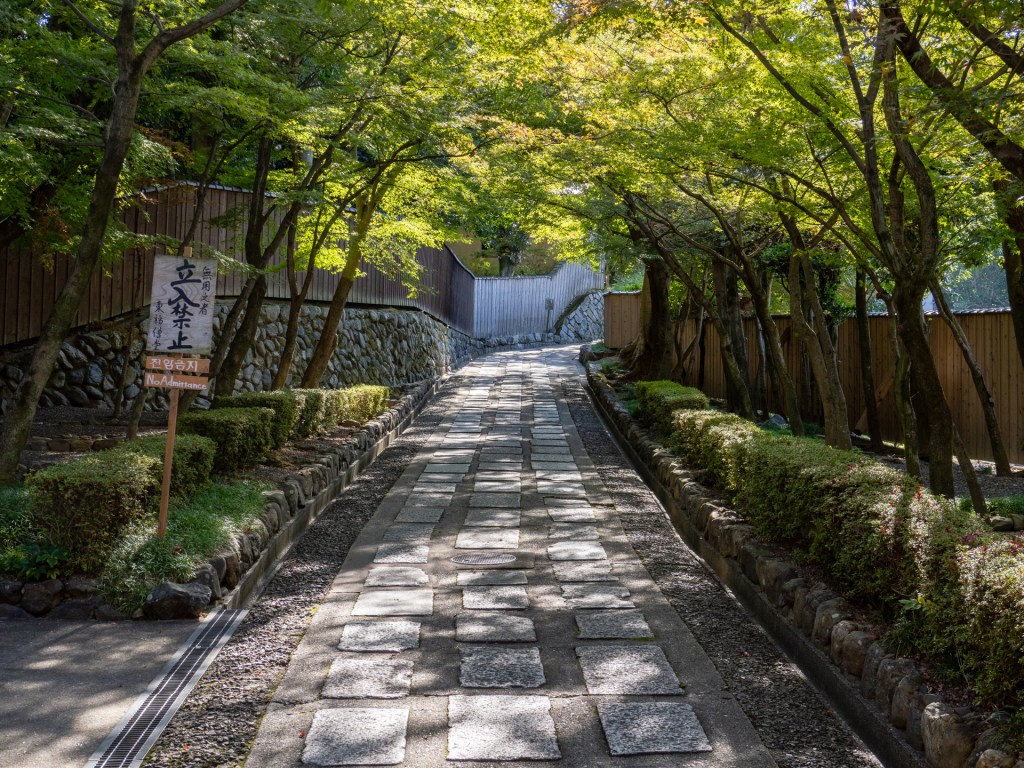
Tofuku-ji, founded in 1236, is one of the five great zen temples in Kyoto (the ‘five mountain system’). Tofuku-ji is about a 30-minute walk from our hotel, and we have visited previously. The image above is a quiet side-path leading to the private area of the temple (thus, the stern “No Admittance” sign).
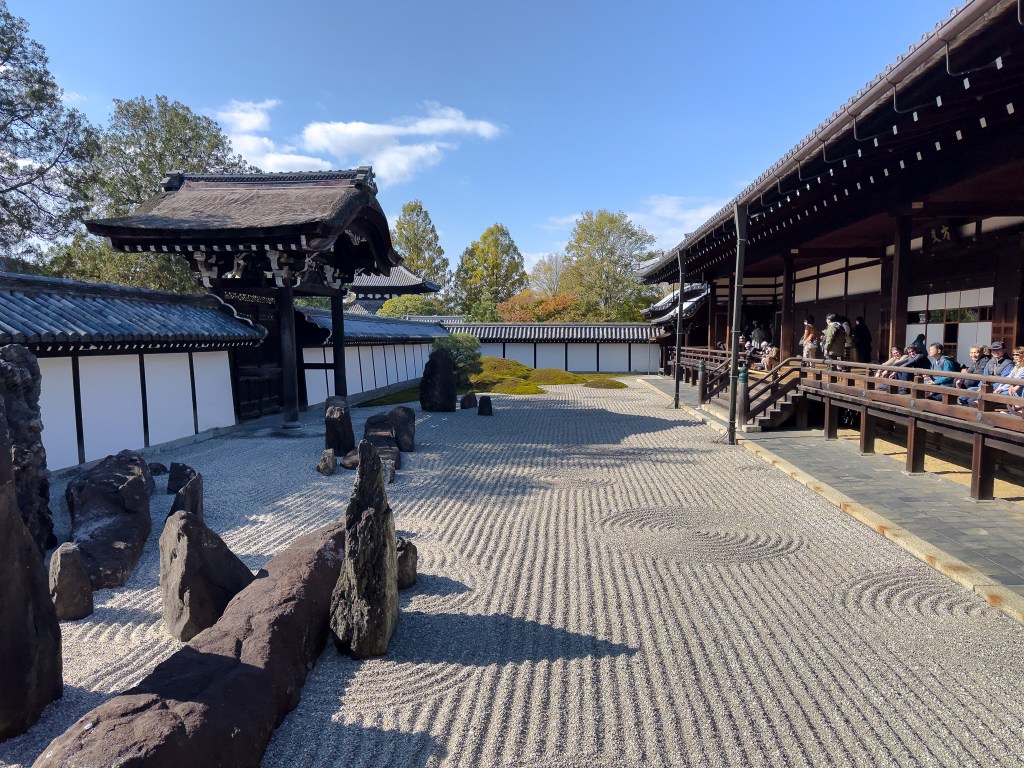
Hojo Garden at Tofuku-ji is composed of four separate gardens designated by the points of the compass. Above is the raked sand and standing stones at the South Garden.
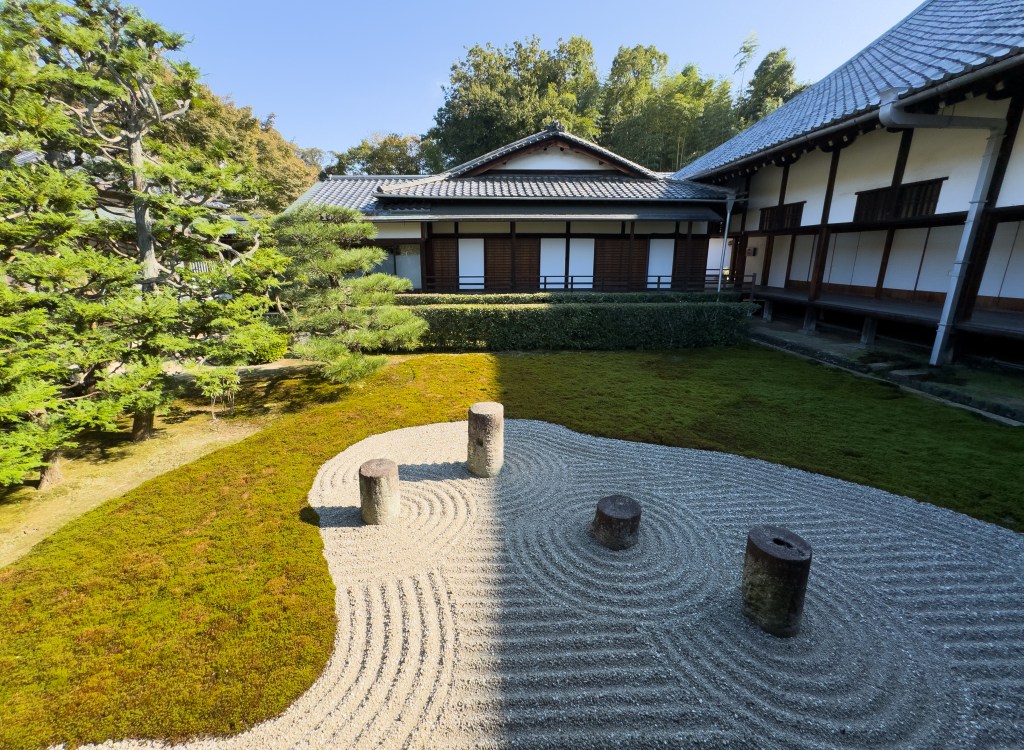
The round pillars in the raked sand of the East Garden represents the Big Dipper (I hope to capture a better photo on a future trip).
The celebrated garden desinger of the 20th century, Shigemori Mirei, would often reuse pillar bases in his creations, notably in his “Big Dipper” garden (1939) at Tofukuji. In the middle of an expanse of streaked white sand, he places seven stone pillar support that were found when they restored one of the old temple structures.
Another Kyoto, Alex Kerr with Kathy Arlyn Sokol, p. 76.
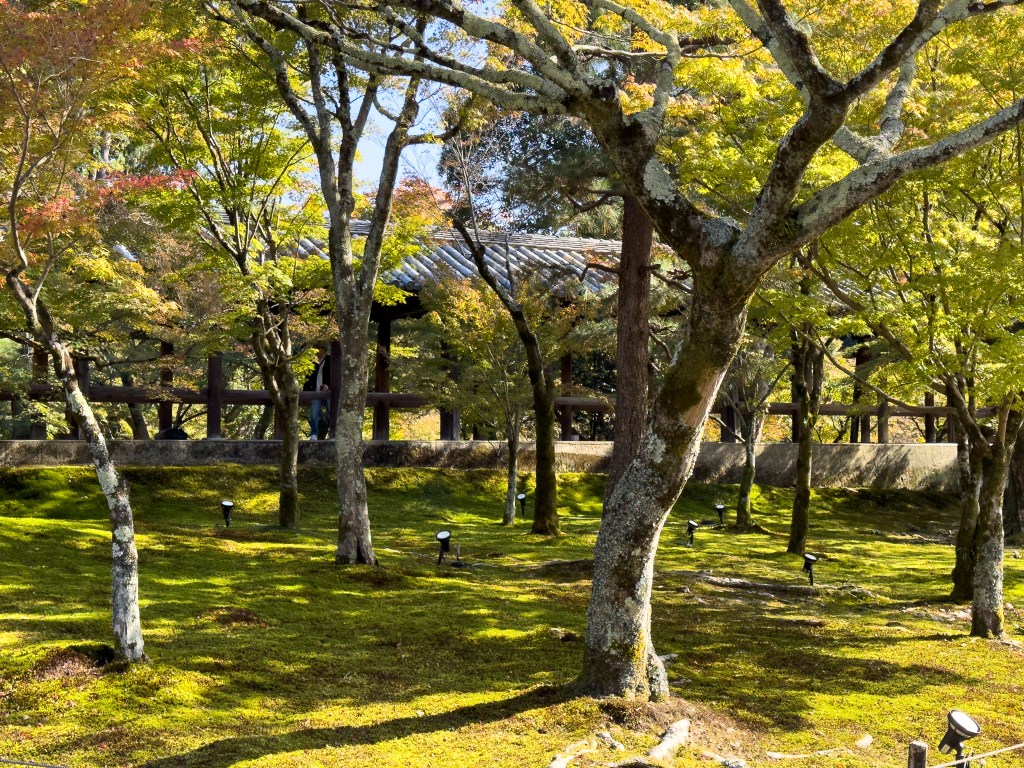
Trees and moss on the extensive grounds of Tofuku-ji.

The Kyoto National Museum hosted a large exhibition of artifacts from Tofuku-ji in late 2023, titled “Tofuku-ji: Monumental Zen Temple of Kyoto”. The experience was overwhelming, and we made two visits to take in as much as possible.
The range of items on display was breathtaking, including scrolls, painting, clothing, pottery, tools, etc., dating back over 800 years.
Above is a seated Buddha from Tofuku-ji, one of the few items from the exhibit that visitors were allowed to photograph.
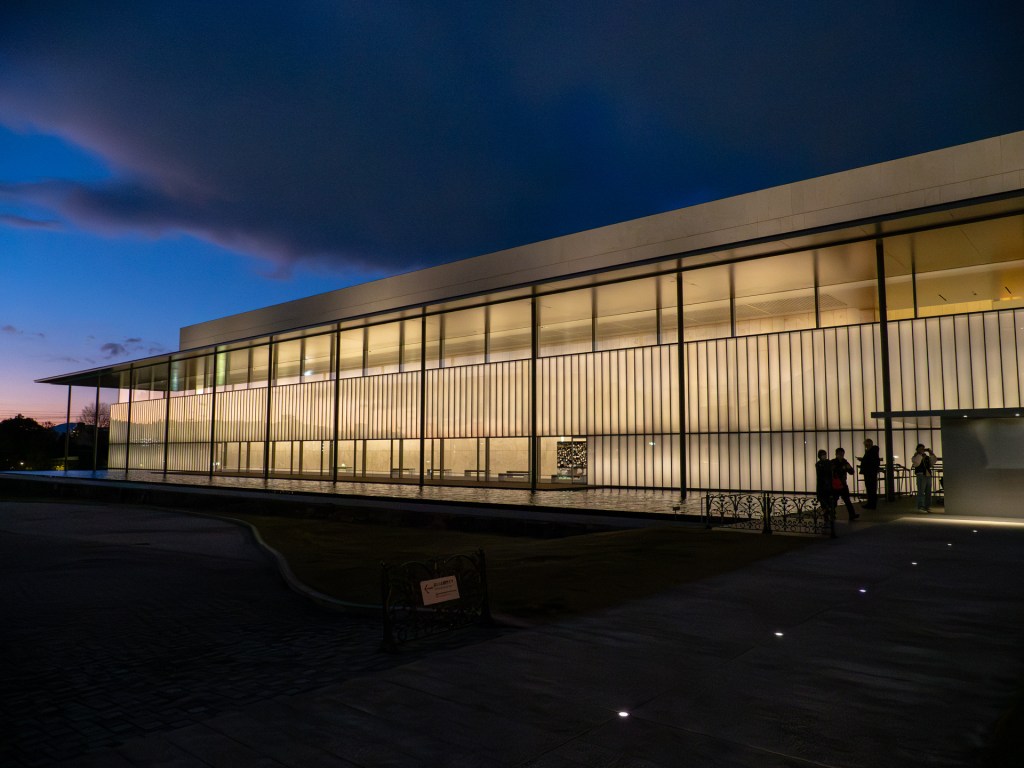
The Tofuku-ji exhibition was held in the new wing of the Kyoto National Museum, which opened in 2013.
Kodai-ji
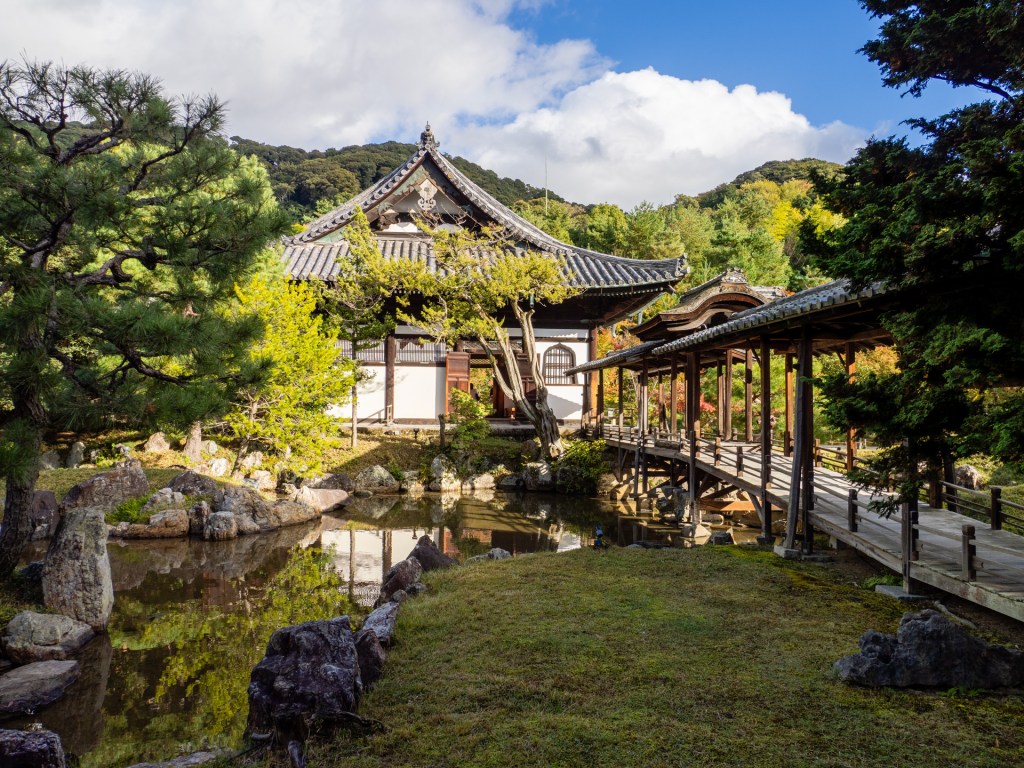
Kodai-ji is a Zen temple founded in 1606 by Kita-no-Mandokoro (aka Nene) in memory of her late husband, Toyotomi Hideyoshi, who “by all accounts was the most energetic and monumental builder of Japan’s premodern age.”1
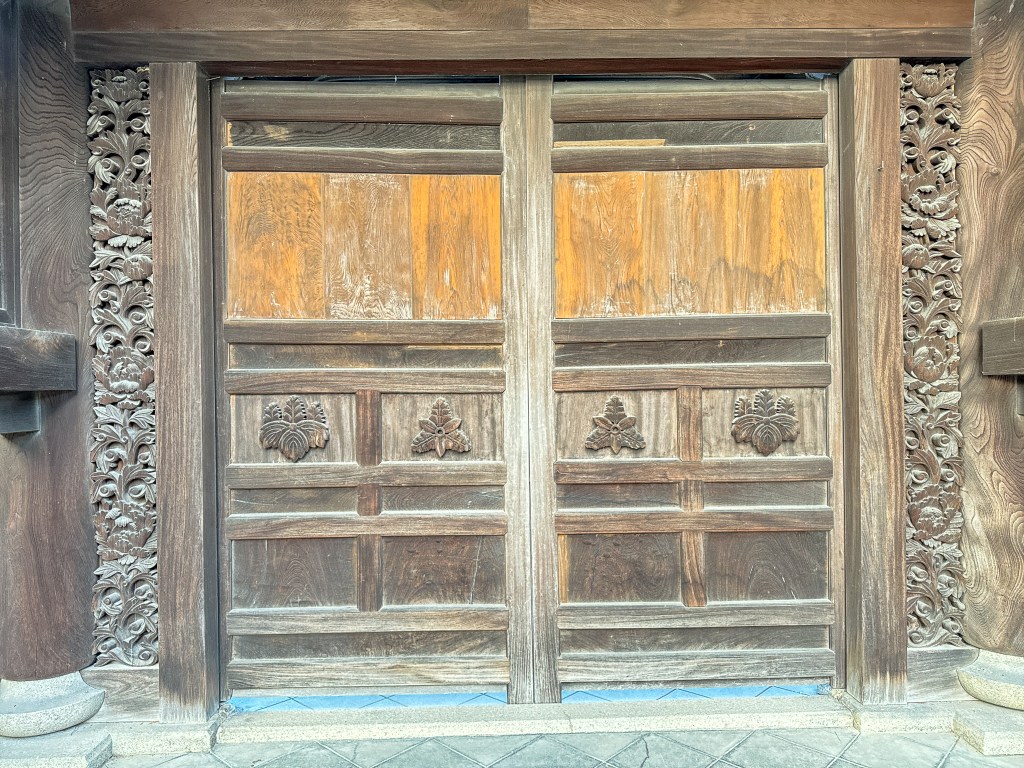
A door in a wall at Kodai-ji.
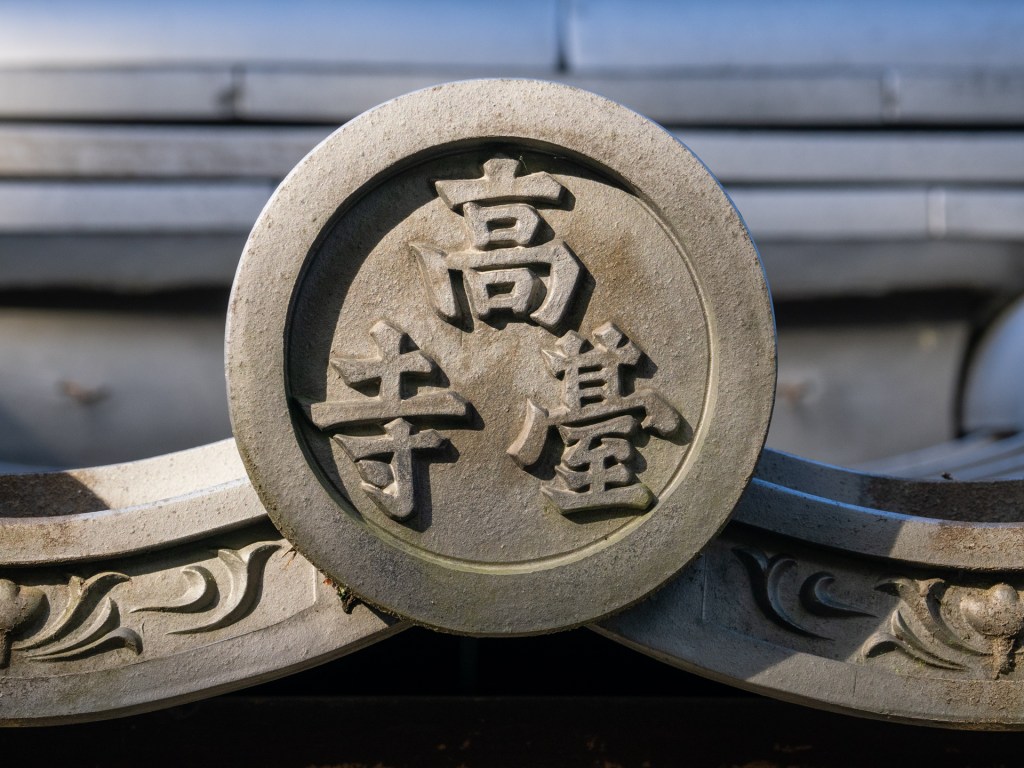
Detail of a roof ornament at Kodai-ji—the three characters represent the name Kodai-ji.
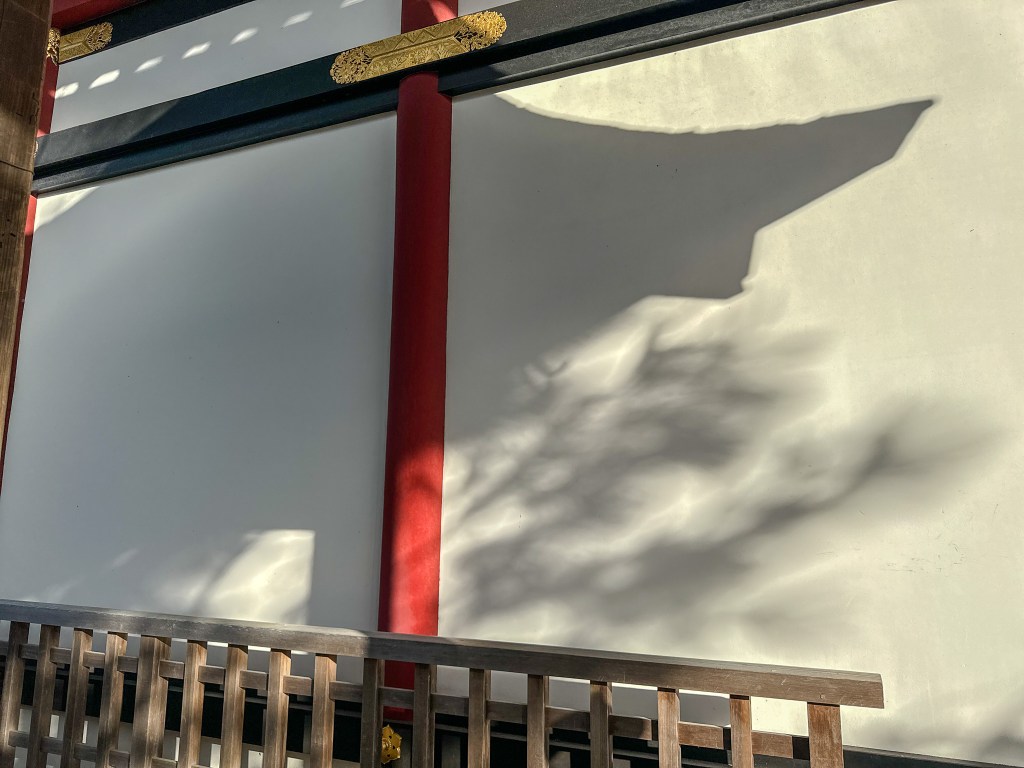
It is difficult on temple grounds in Kyoto to walk by a shadow without stopping to observe.
Kamogawa Birds
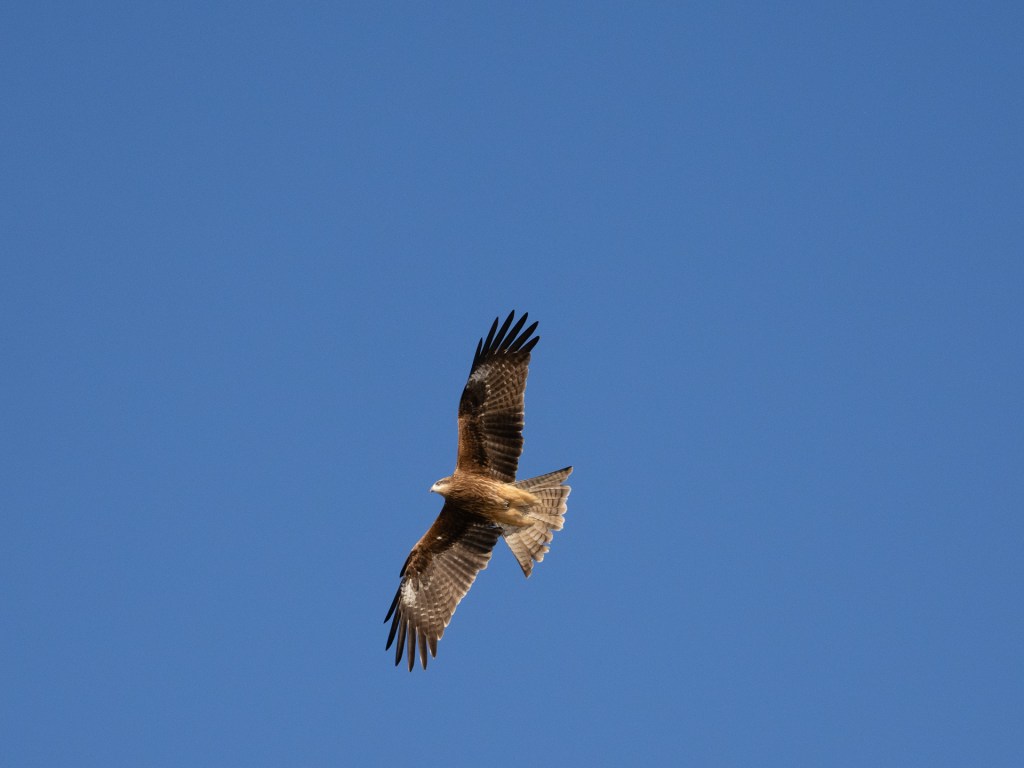
The Kamo River (Kamogawa) flows roughly north to south, is a short distance to the west of the Higashimaya area, and serves as a peaceful walking, cycling, and jogging route for locals and tourists. The river is also a good place to see birds, including the Black Kite (Milvus migrans) circling in the photo above. On our Kyoto river walks, we usually spot them by hearing their piercing squeal.
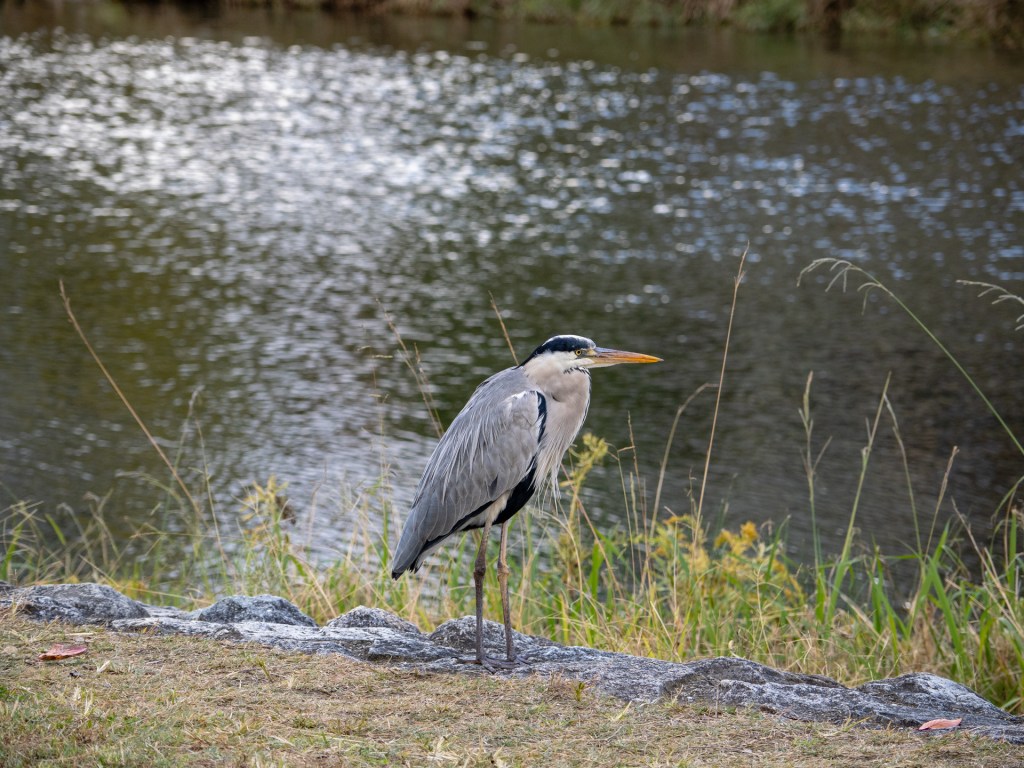
The tall heron that looks like a Great Blue Heron in the above photo is a Gray Heron (Ardea cinerea). The Gray Heron is smaller than the Great Blue Heron (Ardea herodias) and has some coloration differences, according to the Cornell Lab of Ornithology’s Birds of the World website.
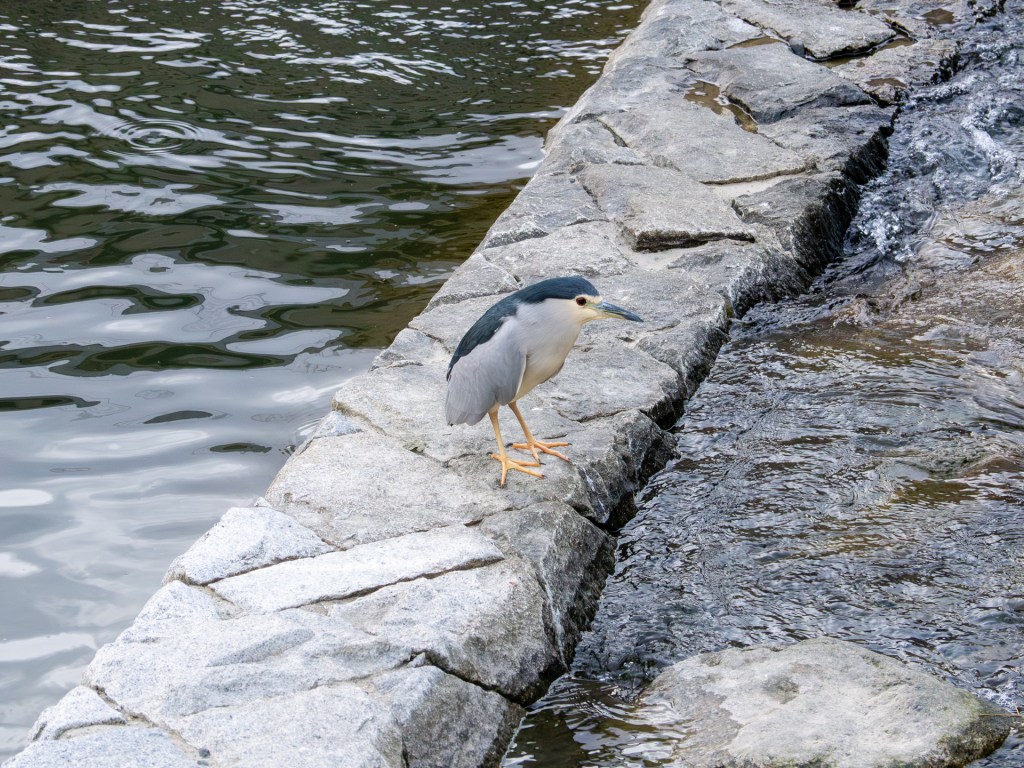
On this trip, we spotted the Black-crowned Night Heron (Nycticorax nycticorax), described by the Cornell Lab of Ornithology’s Birds of the World as “the most widespread heron in the world, breeding on every continent except Antarctica and Australia….” We have also seen this heron at Malheur and at Tule Lake and Lower Klamath wildlife refuges in the U.S.
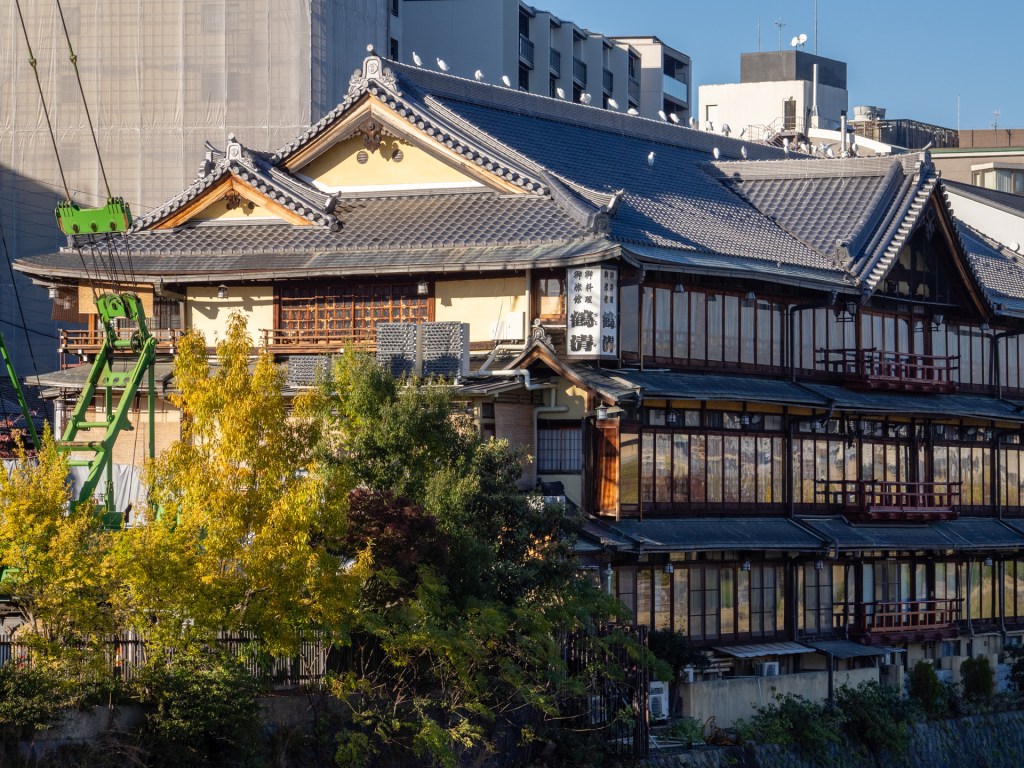
A third type of heron that lives along the Kamo River is the Little Egret (Egretta garzetta); in the photo above, more than twenty are standing on the top of the roof of the Tsuruse restaurant and inn.
Kyoto Cuisine
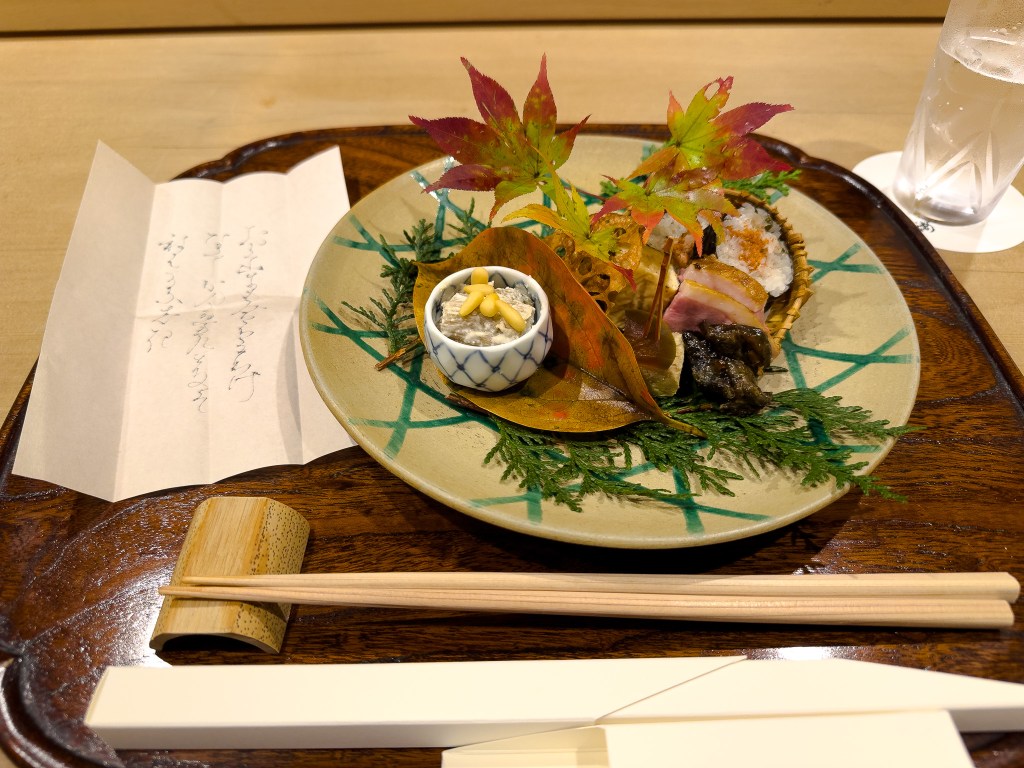
We enjoyed several tasty and artistically presented meals in Kyoto on this trip, including these three dishes from the restaurant Mokubee.

Ginkgo nuts are a popular taste of autumn in Japan, and I developed a liking for the slightly bitter flavor while living in Tokyo.
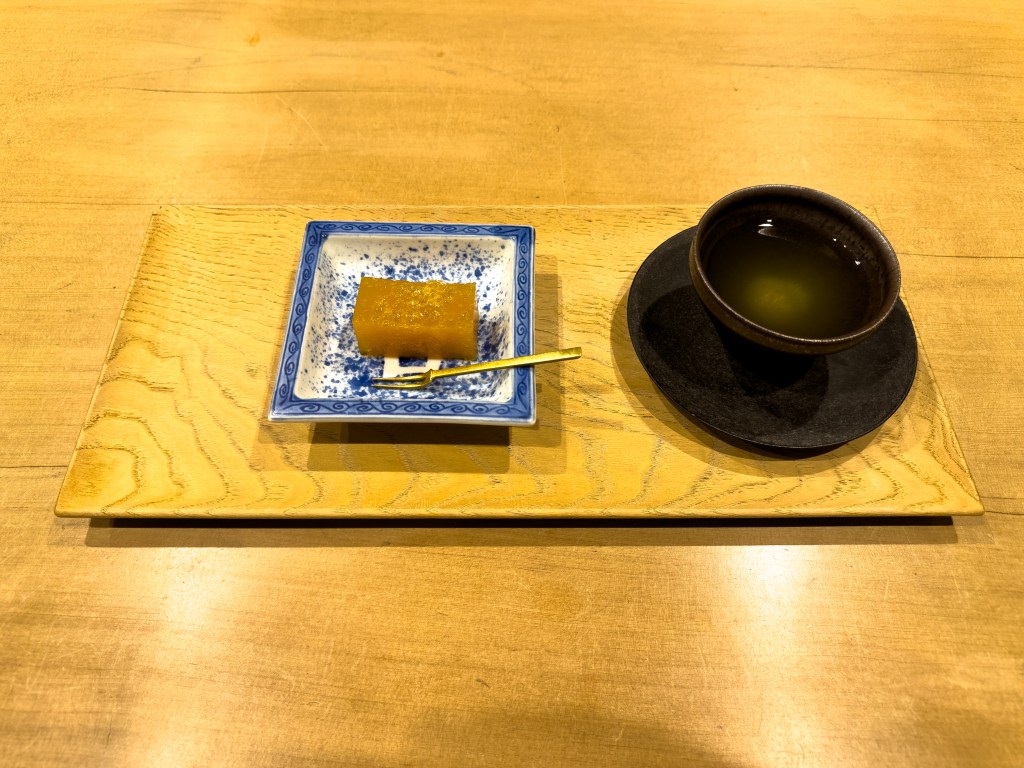
The final course of our lunch at Mokubee featured a pairing of a Japanese jellied dessert with green tea (sencha).
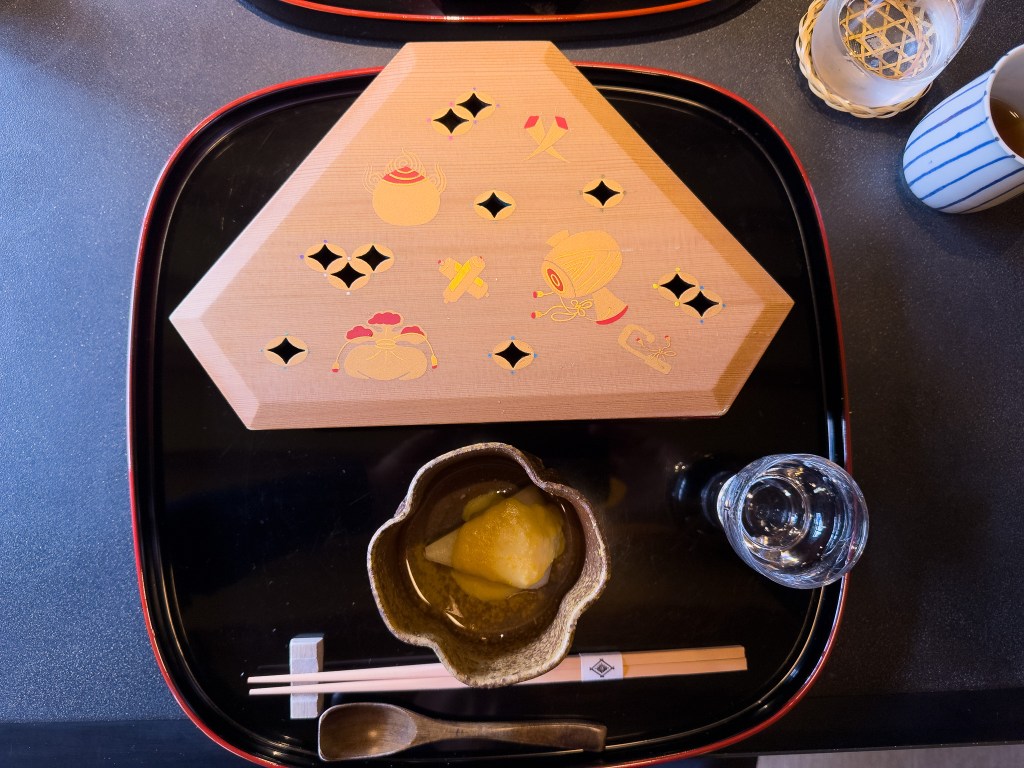
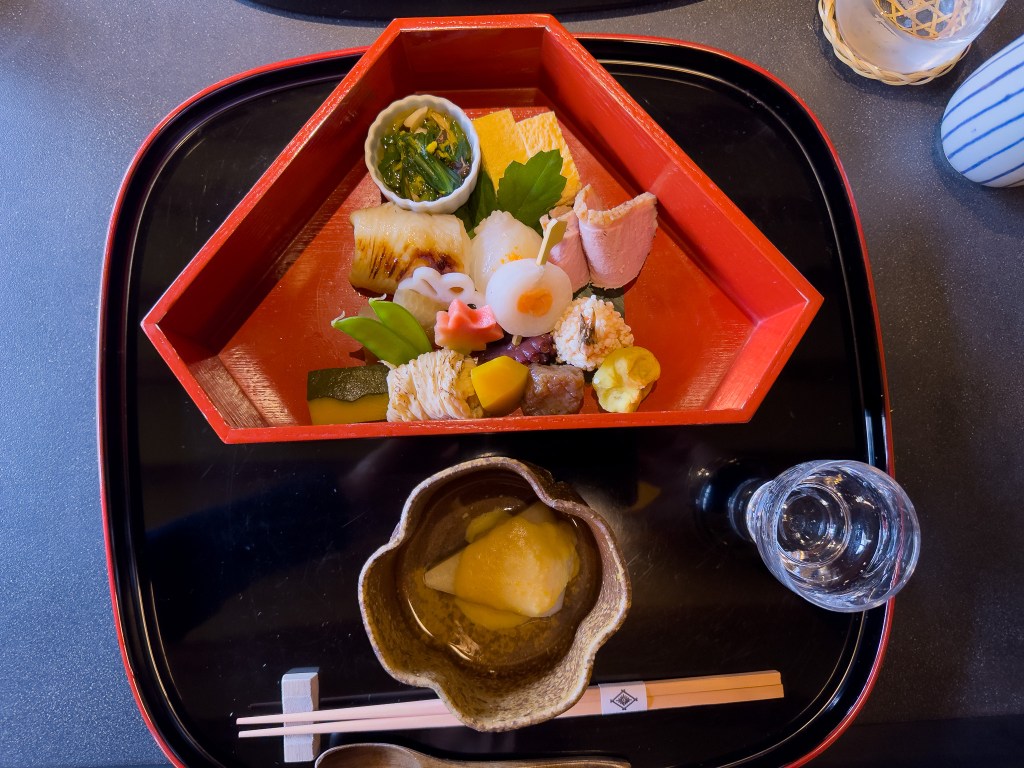
In December 2022, we enjoyed an exceptional meal at the Kyoto restaurant Kikunoi Honten, and wrote about it at this link. In November 2023 Kikunoi Honten was fully booked, but we had a delicious lunch at a nearby cafe, Salon de Muge overseen by the same chef who owns Kikunoi Honten, Yoshihiro Murata. One of the courses was presented in a beautiful box, as shown below.
There is always more to see in Kyoto.
- Kyoto: An Urban History of Japan’s Premodern Capital, Matthew Stavros, p. 152. ↩︎
 Walking with Curiosity
2 responses to “Kyoto November 2023”
Wow, Tom! Fascinating and beautiful!!
Thank you so much for sharing a bit of Japanese culture and history. So informative and as always stunning photos.
<
div>It would be gre
LikeLiked by 1 person
Thank you Judith! I appreciate your encouraging feedback!
LikeLike